
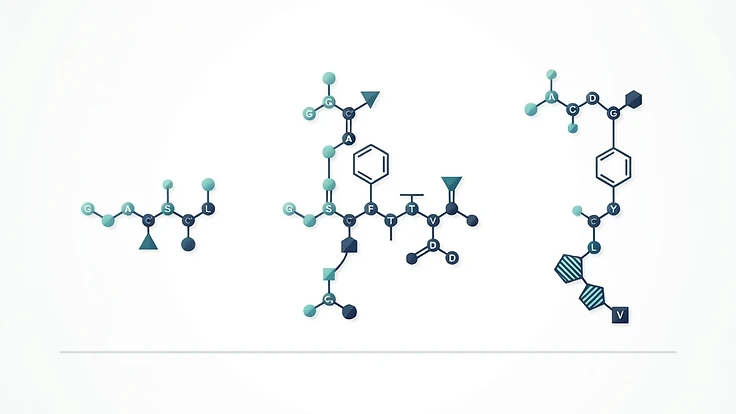
Quick answer: All three of these peptides try to get your own pituitary gland to release more growth hormone, but they do it in different ways. Sermorelin is the gentlest and shortest acting. CJC-1295 works through the same pathway as sermorelin but lasts much longer in the body. Ipamorelin works through a completely different pathway and is usually paired with one of the other two rather than used alone.
What They All Have in Common
None of these three peptides contain growth hormone itself. Instead, each one signals your pituitary gland to make and release more of your own growth hormone. This is different from injecting growth hormone directly, since it works with your body's existing system instead of replacing it.
Sermorelin: The Original, Gentle Option
Sermorelin is a copy of the first part of a natural hormone your body makes called growth hormone releasing hormone, or GHRH. When it reaches your pituitary gland, it triggers a burst of growth hormone release.
The catch is its short lifespan. Your body breaks sermorelin down within about 10 to 12 minutes of injection. That means the growth hormone burst it triggers is brief, closely matching what a naturally healthy, younger pituitary gland would produce on its own.
CJC-1295: The Longer Acting Version of the Same Idea
CJC-1295 works through the exact same receptor as sermorelin. The difference is that it has been changed at a molecular level to last much longer in the body. This stretches out the signal telling your pituitary to keep releasing growth hormone, which generally leads to a bigger, more sustained effect than sermorelin's short pulse.
You will sometimes see CJC-1295 described as coming "with DAC" or "without DAC." DAC stands for a modification that extends the peptide's action even further. The version without DAC still lasts longer than sermorelin, just not as long as the DAC version.
Ipamorelin: A Different Pathway Entirely
Ipamorelin does not work through the GHRH pathway at all. It works through a separate one, mimicking a hormone called ghrelin, the same hormone tied to hunger signals. This pathway is known as the ghrelin or growth hormone secretagogue receptor pathway.
Research first described ipamorelin as a selective growth hormone secretagogue, meaning it raises growth hormone without meaningfully raising two other hormones, cortisol and prolactin, that caused problems with some earlier compounds in this category.
Because ipamorelin works through a separate pathway from sermorelin and CJC-1295, it is usually paired with one of them rather than used by itself. Combining a GHRH pathway peptide with a ghrelin pathway peptide is thought to produce a bigger growth hormone response than either one alone, since they are hitting two different switches on the same pituitary cell.
Side by Side
| Sermorelin | CJC-1295 | Ipamorelin | |
|---|---|---|---|
| Pathway | GHRH receptor | Same GHRH receptor as sermorelin | Ghrelin receptor, a separate pathway |
| How long it lasts | Very short, broken down in minutes | Much longer than sermorelin | Short, but selective |
| Typical use | Alone, for a gentle, natural feeling pulse | Often combined with ipamorelin | Almost always combined with a GHRH peptide |
| Off-target hormone effects | Minimal | Minimal | Considered selective, minimal cortisol or prolactin increase |
Why This Choice Isn't About Finding a "Best" One
These three peptides are not really competing for the same job. Sermorelin is generally discussed for a gentler, more natural feeling pattern. CJC-1295 and ipamorelin together are generally discussed for a stronger, more noticeable effect on growth hormone output. Neither approach is universally better. It depends on what someone is actually trying to research or achieve, and what their starting point looks like.
A Side Effect Worth Knowing About All Three
Since all three peptides raise growth hormone, they can all be linked to water retention, a swollen or puffy feeling, especially early on. This comes from how growth hormone affects sodium and fluid balance in the body, not from anything specific to one peptide over another. For more on this specific side effect, see our full breakdown of water retention on GH secretagogues.
Myth vs. Fact
Myth: Ipamorelin can fully replace CJC-1295 or sermorelin since it is the "cleanest" option. Fact: Ipamorelin works through a different pathway entirely. It is not a stronger or cleaner replacement for a GHRH peptide, it is a different tool that is often used alongside one.
Myth: More peptides combined always means a better result. Fact: Combining peptides that hit different pathways has a real, understandable rationale, but it also means more variables and more chances for side effects. It is not automatically the right choice for every situation.
Bottom Line
Sermorelin, CJC-1295, and ipamorelin all aim at the same broad goal, more of your own growth hormone, but they get there through different mechanisms and different intensities. Understanding which pathway each one uses is the key to understanding why they so often get discussed together instead of against each other.
Research use only. This article is for general education and is not medical advice. None of these peptides should be used without guidance from a licensed healthcare provider.
Sources referenced: Comparative research summaries from HealingMaps, Livv Natural, and RWA Center on sermorelin, CJC-1295, and ipamorelin mechanisms; original European Journal of Endocrinology research describing ipamorelin as a selective growth hormone secretagogue.