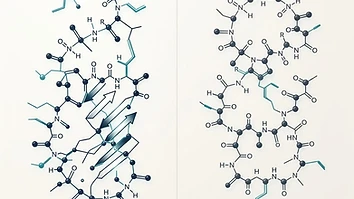
Quick answer: A peptide is a short chain of amino acids, the same building blocks that make up every protein in your body. What separates a peptide from a protein comes down to size and shape. Peptides are shorter, simpler chains. Proteins are longer chains that fold into complex 3D shapes. Your body already makes and uses thousands of peptides every day, for things like digestion, hormones, and healing. Most of the peptides you hear about in research today are lab-made versions of peptides your body already makes, or peptides built to copy a natural signal.
Peptides vs. Proteins vs. Amino Acids
These three words get used almost like they mean the same thing online, and that is a big part of why this space feels confusing. Here is the actual order.
Amino acids are the small building blocks. Your body uses 20 standard ones.
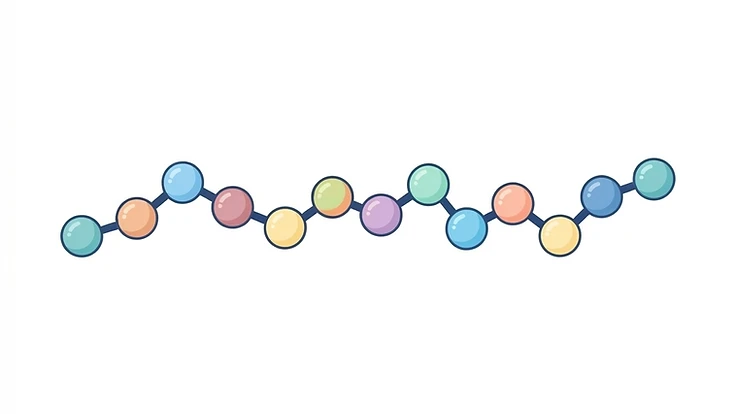
A peptide is a short chain of amino acids linked together, usually anywhere from 2 to around 50.
A protein is a much longer chain, or several chains, of amino acids folded into a specific 3D shape. Think hemoglobin, collagen, or insulin.
There is no single hard line between "peptide" and "protein." It is more of a spectrum based on length and shape. But the practical difference matters. Peptides tend to act more like simple, targeted messages. Proteins are often bigger structural or working parts of the body.
Why Do Peptides Do Anything at All?
Your body uses peptides constantly as messengers. Insulin, which controls blood sugar, is a peptide hormone. Oxytocin, the hormone tied to bonding and childbirth, is a peptide too. Even some natural antibiotics your body makes to fight infection are peptides.
Research interest in lab-made peptides has grown so fast not because scientists invented a brand new kind of molecule, but because they have gotten much better at making a specific peptide in a pure, stable form in a lab. That lets researchers study one single signal at a time instead of relying on the tiny amount your body naturally makes.
Why Are Peptides Suddenly Everywhere?
If you have noticed the word peptide showing up constantly the last couple of years, there is a clear reason. The huge success of GLP-1 peptide drugs, the group that includes semaglutide, sold as Ozempic and Wegovy, put the word into everyday conversation for the first time. Those drugs are FDA approved and backed by large human trials. Their success created a spillover effect. Once people learned that "a peptide" could help millions of people lose weight, interest spread to dozens of other, much earlier stage peptides being discussed in research and biohacking spaces, most of which have a very different evidence level than the approved GLP-1 drugs. Understanding that gap might be the single most useful thing a beginner can take from this whole topic.
Two Very Different Categories You Will Run Into
This is the part beginners miss most, and it changes how you should read anything you find online.
FDA approved peptide drugs, like semaglutide and tirzepatide, have gone through large, multi phase human trials, have an approved label with a set dose, and are prescribed by doctors.
Research use only peptides, like BPC-157, TB-500, and most of what you see discussed in biohacking spaces, are sold specifically for lab research, not human use. Their evidence ranges from solid animal data to very little or no human data at all. None of these carry an FDA approved label or dosing guidance.
Neither group is automatically good or bad. But mixing the two together in casual conversation, which happens constantly, is where a lot of the confusion, and some of the real risk, in this space comes from.
How Peptides Are Usually Given
How a peptide is delivered matters more here than it does for a lot of other substances, because peptides are fragile. They are chains, and your digestive system is built specifically to break chains like that apart. That is why most research peptides are injected, since injection skips the digestive system entirely. Oral versions exist but face real challenges getting absorbed, since a lot of what you swallow gets broken down before it can do anything. Some smaller peptides come as nasal sprays instead, which is another way to skip digestion.
Myth vs. Fact
Myth: If something is called a peptide, it is basically the same category as a protein supplement. Fact: Protein powder gets digested and broken into amino acids like any food protein. Research and drug peptides are specific molecules studied for a specific job. They are not nutrition supplements the way whey protein is.
Myth: Peptides are a brand new, unproven area of science. Fact: Peptide medicine has existed for decades. Insulin itself is a peptide drug that has been used since the 1920s. What is new is the sheer number of newer, less studied peptides now circulating outside of medical supervision.
Where to Go From Here
If you are just starting out, the two most useful next steps are understanding what RUO actually means, and reading up on one specific peptide you are curious about, instead of trying to take in the whole space at once.
Research use only. This article is for general education. It is not medical advice, and it is not meant to encourage using any unapproved compound in the human body. Talk to a licensed doctor for guidance about your own health.
Sources referenced: General peptide biochemistry background; reporting on the growth of the GLP-1 category and its spillover effect on broader peptide interest.