
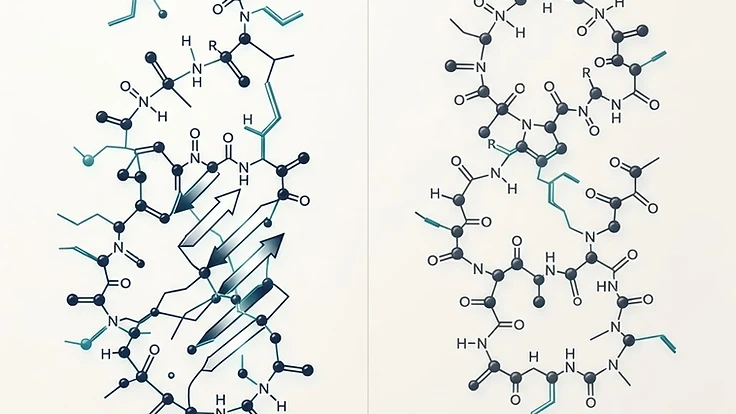
Quick answer: BPC-157 and TB-500 are two different molecules that often get discussed side by side for recovery. Together they are nicknamed the Wolverine Stack. BPC-157 is a short peptide made from a protein in human stomach juice, and it is mostly studied for local blood vessel growth and gut protection. TB-500 is a lab-made piece of a much bigger natural protein called thymosin beta-4, and it is studied more for cell movement and whole-body repair. They are not the same thing wearing two different names.
Where Each One Comes From
BPC-157, short for Body Protection Compound 157, is a synthetic peptide made of 15 amino acids. It is based on a piece of protein found in human stomach juice. Most of its early research looked at gut healing, things like ulcers and gut inflammation. More recent research also looks at tendon, ligament, and local tissue repair.
TB-500 is a very different kind of molecule. It is a lab-made, 17 amino acid piece taken from a much bigger, natural 43 amino acid protein called thymosin beta-4. Your body already makes this bigger protein, and it shows up in nearly every cell you have. TB-500 is basically a small, man-made piece of a system your body already runs.
How Their Mechanisms Actually Differ
This is the part most comparison articles skip, and it is the most useful part.
| BPC-157 | TB-500 | |
|---|---|---|
| How it may work | Signals related to nitric oxide and new blood vessel growth, plus signals that help cells called fibroblasts move to an injury | Grabs onto a protein called actin, which controls how cells move |
| Main research focus | Local repair, gut lining, tendons, ligaments | Whole-body repair, blood vessel growth, cell movement to injury sites |
| Parent molecule's human data | The original stomach protein has no real human clinical trial program | Thymosin beta-4, the parent protein, has reached later stage human trials for eye healing |
| Direct human trials of the actual compound | None completed and published | None completed and published |
That last row matters more than it looks. A 2026 review of thymosin beta-4 and TB-500 research looked at 80 studies. Only one of them tested TB-500 itself directly. The other 79 studied the full length parent protein or a related piece. That is worth remembering. Most of what gets shared online as "TB-500 research" is really research on a related but different molecule. The same caution applies to BPC-157, since its parent stomach protein has almost no separate clinical research program of its own either.
Why People Stack Them Together
The idea behind combining BPC-157 and TB-500 is that they might work through different, useful pathways at the same time. BPC-157's research leans local, right around an injury. TB-500's research leans systemic, moving through the whole body. Whether that combination actually works better together has not been tested in a real human trial of the pairing itself. The idea comes from two separate mechanism stories, not from a study of the stack.
The Evidence Gap They Both Share
This part applies equally to both peptides. Neither one has a finished, published human trial proving it works for the recovery uses people discuss most. Both were part of the same July 2026 FDA advisory panel review. Both are on WADA's banned list, so none of this matters for any tested athlete. And research on the parent protein of TB-500 has found that in some organs, like the liver, it may actually push tissue toward scarring instead of healing. That is a good reminder that "supports repair" is not a universal, risk-free claim across every part of the body.
Myth vs. Fact
Myth: BPC-157 and TB-500 are basically the same peptide with two different names. Fact: They come from completely different parent molecules and work through different proposed mechanisms. The only thing they really share is that people talk about them together.
Myth: Since TB-500 comes from a natural body protein, it must be safer. Fact: Coming from something natural does not prove safety on its own. The synthetic piece sold as TB-500 has not been directly tested in humans, and the parent protein does not act the same way in every organ.
Bottom Line
BPC-157 and TB-500 are two separate research stories that happen to get discussed in the same breath, not two versions of the same idea. If you are researching either one, sourcing matters just as much as the science. Look for a supplier who shares real, independent lab testing instead of relying on marketing claims alone.
Research use only. This article is for general information. It is not medical advice. Neither BPC-157 nor TB-500 is approved by the FDA for human use. Talk to a licensed doctor before making any health decision.
Sources referenced: Superpower peptide research guides; RethinkPeptides mechanism review; McGuire, Hughes, Maak and Cushman scoping review on thymosin beta-4 and TB-500, published in Applied Sciences, 2026; peer reviewed research on thymosin beta-4 in liver and kidney fibrosis models.