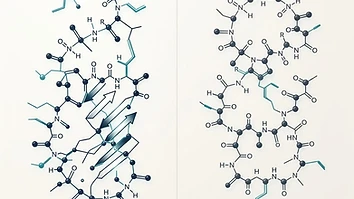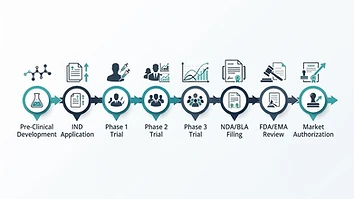
Quick answer: The Wolverine Stack is a nickname used by the community, not a clinical term, not a branded product, and not something any regulator has ever defined. It refers to combining BPC-157 and TB-500, two peptides studied for tissue repair. The name comes from the Marvel character famous for near-instant healing, and it got popular partly through biohacking and fitness media, including content from biohacker Ben Greenfield. There is no single, fixed formula behind the name. What gets sold under it varies from seller to seller, and the name itself carries no regulatory or clinical weight at all.
Where the Name Comes From
The nickname is a simple pop culture reference. Wolverine, the X-Men character, is known for healing from serious injuries almost instantly. When biohacking and recovery communities started talking about BPC-157 and TB-500 together for their tissue repair research, the comparison was an easy, memorable one to reach for. It stuck.
Biohacker Ben Greenfield has written about his own version of what he calls a "Recover Like Wolverine" stack, describing using it for a hamstring injury. His version actually combines more than just the two core peptides, adding ipamorelin, tesamorelin, and GHK-Cu into the mix. That is worth pointing out, because it shows the real problem with the nickname. There is no single, agreed-upon Wolverine Stack. Some people use the name just for BPC-157 and TB-500. Others stretch it to include more peptides. Since no regulator or clinical guideline defines the term, whoever is using the name gets to decide what goes in it.
What the Name Doesn't Mean
This is worth saying clearly, because the branding does a lot of the persuading on its own. Calling something the Wolverine Stack does not mean it has been studied as a combination. It does not mean it produces anything close to real accelerated healing. And it does not mean the name has any tie to an approved medical treatment. It is community shorthand, nothing more.
Why BPC-157 and TB-500 Get Paired
Setting the nickname aside, the actual reasoning behind combining these two peptides comes down to their different proposed mechanisms.
BPC-157 is studied for local effects, meaning signals tied to new blood vessel growth and repair happening right at or near an injury.
TB-500 is studied for a more whole-body role, meaning cell movement that could support a broader healing response through the body, not just locally.
The thinking behind stacking them is that these different jobs could work well together. It is worth being honest about the evidence for that idea, though. The two peptides have been studied on their own, in separate research, far more than they have been studied together as a pair. A 2026 review of thymosin beta-4 and TB-500 research, the most complete review of that topic so far, found that almost every relevant study looked at the peptides on their own or looked at the parent protein rather than this specific combination.
What the Research Actually Shows
Most of what gets cited in Wolverine Stack content comes from animal studies, not human trials. As of 2026, neither BPC-157 nor TB-500 has a finished, published human trial that proves it is safe or effective for the recovery uses people talk about most. One systematic review looking specifically at human safety data for BPC-157 reported that none exists in published research yet. That does not mean the underlying science is fake. Both peptides have real, published animal research behind their proposed mechanisms. But the jump from promising animal data to healing like Wolverine is a big one that current evidence does not fully back up.
Myth vs. Fact
Myth: The Wolverine Stack is one specific, standard protocol. Fact: It is an informal nickname with no fixed formula. What gets sold under that name changes depending on the seller.
Myth: Since it is named after a comic book healer, it must be a joke term with no real science behind it. Fact: Both individual peptides do have real animal research behind their proposed mechanisms. The nickname is hype, but the underlying peptides are genuinely studied, just not yet proven in humans for this specific use.
Bottom Line
The Wolverine Stack is a catchy name for a two-peptide combination with real, if early, research behind each part on its own, not a proven protocol and not one fixed formula. If you are researching BPC-157 and TB-500, it is worth learning what is actually known about each peptide instead of letting the nickname do the convincing for you.
Research use only. This article is for general education. It is not medical advice. Neither BPC-157 nor TB-500 is approved by the FDA for human use. Talk to a licensed doctor before making any health decision.
Sources referenced: Ben Greenfield Life, "Ben's Peptide Stack for Recovery, Explosive Gains, and Ageless Vitality"; McGuire, Hughes, Maak and Cushman scoping review, Applied Sciences, 2026; multiple 2026 peptide research publications on evidence gaps for BPC-157 and TB-500.