Quick answer: This concern is not made up. Research does show a real link between higher IGF-1 levels in the blood and a somewhat increased risk of certain cancers. The peptides connected to this concern are the ones that raise growth hormone, which in turn raises IGF-1. This does not mean every peptide causes cancer, and it does not mean the risk is the same for everyone. It means this is a real, specific concern worth understanding rather than dismissing.
What IGF-1 Actually Is
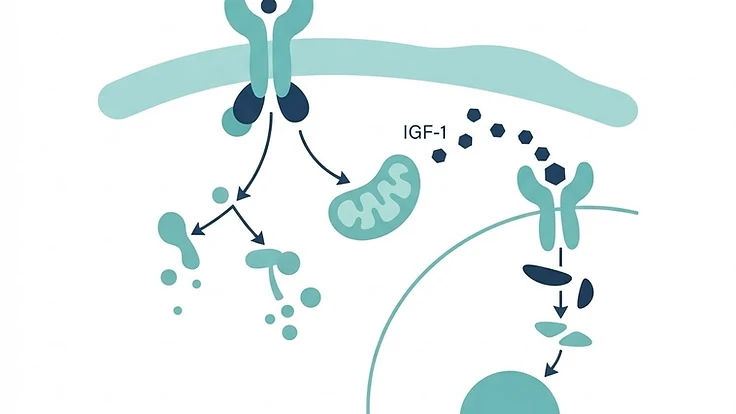
IGF-1 stands for insulin like growth factor 1. Your liver makes it in response to growth hormone. IGF-1's whole job is to tell cells to grow and divide. That is a normal and needed process in a healthy body, especially during childhood growth.
The concern shows up because cancer, at its core, is also about cells growing and dividing when they should not. A hormone whose entire purpose is to encourage cell growth is naturally something researchers look at closely when it comes to cancer risk.
What the Research Actually Shows
This is not a fringe theory. Multiple large studies have looked at this question directly.
A pooled analysis of 17 prospective studies looking at IGF-1 and breast cancer risk found a real, measurable association between higher IGF-1 levels and increased risk. Separate research has found a similar pattern with prostate cancer, and general reviews of the growth hormone and IGF-1 relationship describe consistent evidence linking elevated IGF-1 to increased cancer risk across several cancer types, though not all types studied showed a link.
One especially telling piece of evidence comes from people with a rare genetic condition that blocks growth hormone signaling almost entirely. Long term studies of this group have found dramatically lower rates of both cancer and diabetes, which lines up with the idea that less GH and IGF-1 activity over a lifetime may mean lower cancer risk.
Which Peptides This Actually Applies To
This concern is most relevant to peptides that raise growth hormone in the body, sometimes called growth hormone secretagogues. This includes peptides like ipamorelin, CJC-1295, and similar compounds, since their entire purpose is to increase growth hormone, which then raises IGF-1.
It is less directly relevant to peptides that work through completely different pathways, like BPC-157's blood vessel signaling or KPV's anti-inflammatory mechanism, since those do not work by raising IGF-1 levels.
What This Does Not Mean
It is easy to read research like this and jump to "GH peptides cause cancer," but that overstates what the actual studies show. The research describes an association, meaning higher IGF-1 levels line up with somewhat higher risk in population level data. It does not prove that raising IGF-1 in any one specific person directly causes cancer to form. Cancer risk is influenced by a huge number of factors working together, not one hormone acting alone.
It also matters that most of this research looks at naturally occurring, long term IGF-1 levels in large groups of people, not controlled data on short term supplemental peptide use in otherwise healthy adults.
Why This Still Deserves to Be Taken Seriously
Given that a real, published, repeated association exists between IGF-1 and certain cancers, this is not a concern to wave away, especially for anyone with a personal or family history of hormone sensitive cancers like breast or prostate cancer. This is exactly the kind of individual risk factor that is worth a real conversation with a doctor, not a forum post.
Myth vs Fact
Myth: This is just internet fear mongering with no real science behind it. Fact: Multiple peer reviewed studies, including large pooled analyses, have found a real statistical link between elevated IGF-1 and increased risk of some cancers.
Myth: Since the link is real, any GH peptide use will definitely cause cancer. Fact: An association in population level research is not the same as a guaranteed individual outcome. Risk depends on many overlapping factors, not IGF-1 alone.
Bottom Line
The IGF-1 and cancer connection is grounded in real, repeated research, and it applies specifically to peptides that raise growth hormone. This is a legitimate reason to take a personal and family health history seriously and to talk to a doctor before considering anything in this category, not a reason to panic about every peptide across the board.
Research use only. This is not medical advice. If you have a personal or family history of cancer, talk to a licensed doctor before considering any compound that affects hormone levels.
Sources referenced: Pooled analysis of 17 prospective studies on IGF-1 and breast cancer risk, published in The Lancet Oncology; meta-analysis on serum IGF-1 and prostate cancer risk, Frontiers in Oncology, 2026; review research on the growth hormone and IGF-1 axis in cancer.