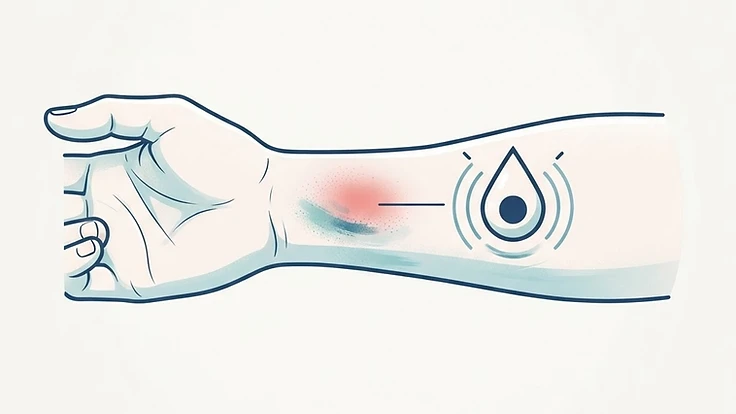
Quick answer: Mild redness, warmth, or a small itchy bump that shows up soon after an injection and fades within a day or two is a common reaction. This happens with all kinds of injected substances, not just peptides. What is not normal: a reaction that gets worse instead of better after two or three days, hives or itching spreading beyond the injection site, swelling of the face or throat, or trouble breathing. Those are signs to stop and get medical help right away, not signs to push through.
Why This Happens At All
Injection site reactions are not unique to peptides. They show up across all kinds of injected substances, from vaccines to insulin to other injected drugs. How often they happen varies a lot depending on what is being injected. Some drug classes report reactions in under 1 percent of people. Others report them in a large share of people.
For peptides, a local reaction at the injection site is often just your immune system responding to something new under your skin. Some amount of local inflammation is a normal part of that, not automatically a sign something is wrong.
What's Generally Considered Normal
Based on how injection reactions are usually described in medical settings, symptoms that tend to be mild and go away on their own include redness or warmth at the site, mild itching, a small soft lump that clears up in a day or two, and slight soreness, similar to a routine vaccine. These usually peak in the first day or three and clear up without you doing anything special.
What Might Signal a Bigger Issue
Some peptides tend to cause more noticeable local reactions than others. Antimicrobial peptides like KPV and LL-37 are thought to activate immune cells more directly right at the injection site, which can create a stronger local response. CJC-1295 with DAC has also been mentioned often as more likely to cause a reaction than the version without DAC. None of this automatically means something is wrong. It means reaction strength can vary by which peptide you are using, and it helps to know which ones are more commonly discussed this way if you are trying to figure out what caused a reaction.
Signs that go beyond a normal, short-lived reaction include a reaction that gets worse instead of better after two or three days, ongoing welts or real swelling well past the injection site, hives or itching spreading away from the site, signs of infection like growing warmth, pus, red streaks, or fever, and any trouble breathing or swelling of the face, lips, or throat. That last group needs emergency medical care right away, since it can mean a serious allergic reaction.
A Note on "Peptide Flu"
Some people researching growth hormone peptides describe a short run of flu-like feelings, tiredness, a mild headache, body aches, early on. This gets nicknamed peptide flu in community talk. It is not an official medical term, and reports of it are just personal stories, not proven research, but it comes up often enough that it is worth knowing the term.
Why Reactions Can Differ From One Vial to the Next
Here is a detail worth remembering. A reaction can be about the peptide's own mechanism, or it can be about what is actually inside the vial. Impurities, the wrong concentration, or contamination from bad manufacturing can all cause reactions that have nothing to do with the peptide's known effect at all. This is one reason independent purity testing matters so much. It is not just about quality. It is directly tied to safety.
Myth vs. Fact
Myth: Any redness or bump means the product is fake or contaminated. Fact: Mild, short reactions are common with many injected substances, not just peptides, and do not on their own point to a quality problem.
Myth: If a reaction is uncomfortable, you should push through it because it means the peptide is working. Fact: There is no real basis for treating discomfort as proof something is working. A reaction that spreads or gets worse is a reason to stop and get it checked, not a reason to continue.
Bottom Line
Mild, short, local reactions are common enough that they should not alarm you. Reactions that spread, worsen over time, or come with things like trouble breathing are a completely different category, and they call for prompt medical attention. When in doubt, do not try to figure it out yourself.
Research use only. This is not medical advice. If you have a severe reaction, trouble breathing, swelling of the face or throat, or a spreading rash, get emergency medical care right away. Talk to a licensed doctor about any injection reaction that worries you.
Sources referenced: General medical background on injection site reactions across drug classes; clinical guidance on peptide-specific reactions from Revolution Health & Wellness; community and clinical discussion of reaction differences by peptide type.