Quick answer: Peptides are delicate chains of amino acids, and heat, light, and time can all break them down. As a general rule, unmixed peptide powder should be kept cold and out of direct light, and once a peptide is mixed with liquid, it becomes even more sensitive and should be refrigerated and used within the timeframe the manufacturer states.
Why Peptides Break Down So Easily
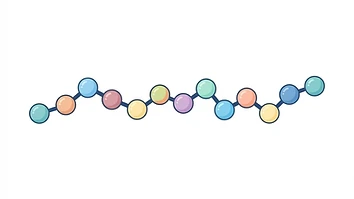
A peptide is a chain of amino acids linked together by chemical bonds. Those bonds can break apart under the wrong conditions, in a process called degradation. Once that happens, the peptide is no longer the molecule it started as. It may not still do what the original peptide was supposed to do.
This is different from a lot of everyday chemicals and supplements, which are much more stable structurally. Peptides are simply more fragile because of their chain-like structure.
The Three Things That Break Peptides Down
Heat. Warm temperatures speed up the chemical reactions that break peptide bonds apart. This is the single biggest factor in how long a peptide stays stable.
Light. Ultraviolet and even regular light exposure can trigger breakdown in some peptides over time. This is part of why peptide vials are often shipped in dark or amber colored glass.
Time. Even under perfect storage conditions, peptides slowly degrade. A peptide that has been sitting in liquid form for months, even refrigerated, is generally less stable than one that was recently mixed.
Storing Peptide Powder Before It Is Mixed
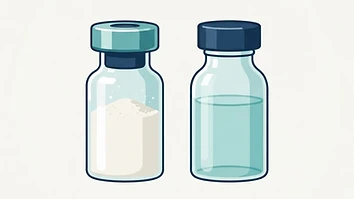
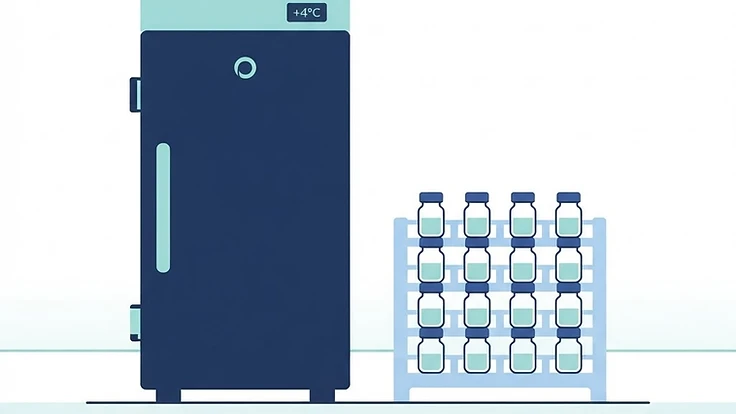
Dry, lyophilized peptide powder, meaning powder that has had all the moisture removed, is the most stable form a peptide comes in. Manufacturers typically recommend keeping it in a freezer or refrigerator, away from light, until you are ready to use it. In this dry, sealed state, peptides can often remain stable for a long time, sometimes years, depending on the specific peptide and how well it was manufactured and sealed.
Storing Peptides After Mixing
Once a peptide powder is mixed with liquid, everything changes. The clock starts moving much faster. A peptide that could sit stable in powder form for a year might only remain stable for a few weeks once it is in liquid form, and that window shrinks further if it is kept anywhere other than a refrigerator.
This is exactly why manufacturers put a specific, shorter shelf life on reconstituted, meaning mixed, peptides compared to the dry powder.
How to Tell If a Peptide Has Degraded
There is no single perfect way to tell just by looking, but a few signs are worth knowing:
- Cloudiness or visible particles in a liquid that was originally clear
- A noticeable color change
- An unusual smell, though not all peptides have a strong smell to begin with even when fresh
None of these signs are a guarantee either way. The most reliable way to confirm a peptide's condition is lab testing, not a visual check.
Why This Connects Back to Sourcing
Storage only matters as much as the product you started with. A peptide that was already poorly manufactured, contaminated, or underdosed will not become reliable just because it was stored perfectly. Good storage protects a good product. It cannot fix a bad one.
Myth vs Fact
Myth: Room temperature storage is fine as long as it is short term. Fact: Even short periods at room temperature can meaningfully speed up degradation, especially for a peptide that has already been mixed with liquid.
Myth: If a peptide still looks clear, it is definitely still good. Fact: Appearance alone cannot confirm a peptide has not degraded. Some breakdown happens at a chemical level with no visible change at all.
Bottom Line
Cold, dark, and fast is the general rule for peptide handling. Keep unmixed powder cold and out of light, refrigerate anything mixed with liquid, and treat the manufacturer's stated shelf life as a real limit, not a rough guess.
Research use only. This article is for general educational purposes. It is not medical advice or a substitute for the specific storage instructions provided by a product's manufacturer.
Sources referenced: General peptide chemistry and stability principles consistent across pharmaceutical and research peptide handling literature.