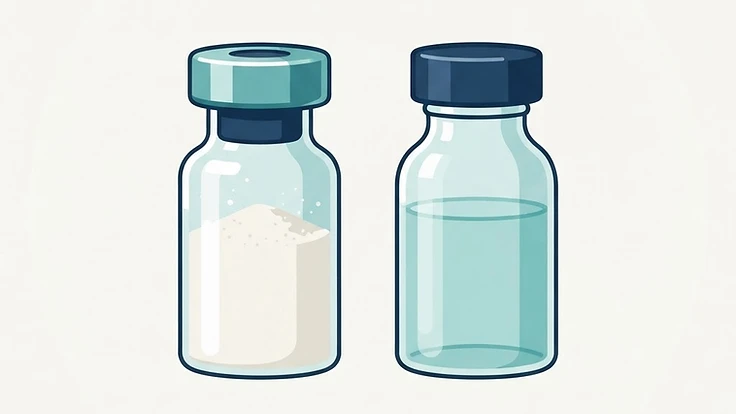
Quick answer: Reconstitution is the process of mixing a dry, powdered peptide with a liquid so it becomes a solution. Peptides usually arrive as a freeze dried powder because that form is far more stable and lasts much longer than a liquid version. Mixing it with liquid makes it usable, but it also starts a clock, since a mixed peptide degrades faster than the dry powder did.
Why Peptides Come as a Powder in the First Place
Manufacturers usually ship peptides in a freeze dried form, sometimes called lyophilized. This process removes essentially all the water from the peptide, leaving behind a stable powder. Without water present, the chemical reactions that break peptide bonds down happen much more slowly. This is why dry peptide powder can often remain stable for a long time, sometimes years, if it is stored correctly, while a liquid version cannot.
What Reconstitution Actually Means
Reconstitution simply means adding a liquid back into that dry powder so it dissolves and becomes usable in solution form. The liquid most commonly used for this in the research space is called bacteriostatic water, which is sterile water with a small added ingredient that helps prevent bacterial growth once the vial has been opened and used more than once.
Why the Type of Liquid Matters
Plain sterile water, without the added bacteriostatic ingredient, is meant to be used once and then discarded, since nothing in it prevents bacteria from growing if the vial is reopened later. Bacteriostatic water is specifically designed to be safer for multiple uses over time, since the added ingredient helps slow bacterial growth between uses. This is why bacteriostatic water is the more commonly used option in most research and clinical peptide handling.
Why Reconstitution Starts a New Stability Clock
Once a peptide is dissolved in liquid, it becomes noticeably less stable than it was as a dry powder. The same chemical breakdown process that dry powder resists so well starts moving much faster in liquid form. This is exactly why manufacturers set a separate, usually much shorter, shelf life for a reconstituted peptide compared to the unmixed powder. Our full peptide storage guide covers how temperature and light affect this process specifically.
Why Technique Matters During Mixing
The actual process of adding liquid to a powdered peptide matters because peptides are structurally fragile. Adding liquid too forcefully, or shaking a vial hard afterward, can physically damage the peptide's structure through excess agitation, separate from any purely chemical degradation. This is why careful, gentle handling during reconstitution is generally recommended, letting the liquid dissolve the powder gradually rather than forcing it.
Why This Article Does Not Include Specific Ratios
You may notice this article explains the concept and the reasoning behind reconstitution without giving specific volume ratios or dosing amounts. That is intentional. Reconstitution ratios are tied directly to dosing decisions, and this site's role is to explain the underlying science clearly, not to provide dosing instructions for any compound. Specific handling instructions for a given product should come from that product's manufacturer or from a licensed healthcare provider.
Myth vs. Fact
Myth: Any water works fine for mixing a peptide. Fact: Plain, non-sterile water is not appropriate for this at all, and even sterile water without a bacteriostatic ingredient is meant for single use rather than a vial you plan to use more than once.
Myth: Once mixed, a peptide lasts just as long as it did as a powder. Fact: Reconstitution meaningfully speeds up degradation. Manufacturers set a shorter shelf life for mixed peptides for exactly this reason.
Bottom Line
Reconstitution is simply the process of turning a stable, dry peptide powder into a usable liquid form, and it comes with real chemistry behind why it is done carefully and why the resulting liquid does not last as long as the powder did. For any specific product, always follow that manufacturer's stated instructions rather than a general guide.
Research use only. This article explains general scientific concepts only. It is not a dosing or usage guide. Follow the specific instructions provided by a product's manufacturer, or consult a licensed healthcare provider.
Sources referenced: General pharmaceutical principles of lyophilization and peptide stability; standard practices for bacteriostatic water use in research and clinical peptide handling.