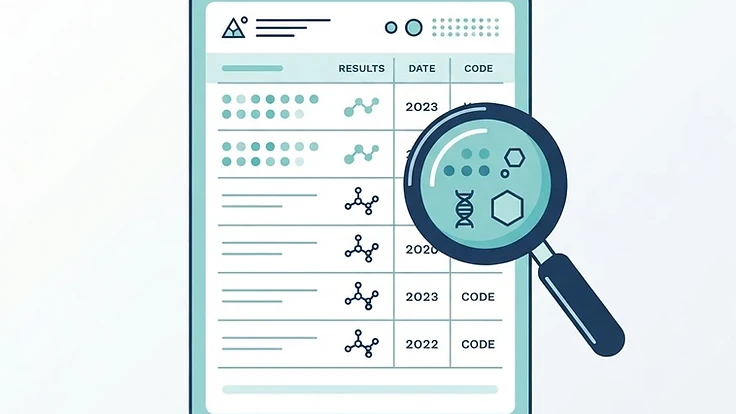
Quick answer: A certificate of analysis, usually shortened to COA, is a lab report that shows what is actually in a specific batch of a product. A useful COA should show the testing method used, the purity result, the batch or lot number, and the date it was tested. If a document is missing any of those, it is not giving you the full picture.
Why a COA Exists at All
Research peptides are not regulated the same way approved medicines are. There is no outside agency checking every batch before it gets sold. A COA is the industry's way of filling that gap. It is a lab's written record of what they found when they tested a specific sample.
The key word there is specific. A COA is only meaningful if it is tied to the actual batch you are buying, not a generic document reused across every order a company ships.
The Parts of a COA Worth Actually Checking
The testing method. Look for HPLC or mass spectrometry. These are the two most common and reliable ways to test peptide purity. If a document does not say how the testing was done, that is a red flag.
The purity percentage. This tells you how much of what is in the vial is actually the peptide it claims to be, versus leftover impurities from manufacturing. Most reputable research peptides report purity in the high 90s.
The batch or lot number. This is what ties the document to the actual product in front of you. Without it, there is no way to confirm the COA belongs to your specific order.
The testing date. A COA from years ago tells you nothing about a batch made recently. Recent testing tied to the batch you are buying is what actually matters.
Who did the testing. A COA from an independent, third party lab that has no financial relationship with the seller carries more weight than one the seller produced in house.
A Simple Example of What a Good COA Looks Like
Imagine a one page document that says: tested using HPLC, purity 99.1 percent, batch number 4471, tested on a specific date, tested by an independent lab name you can look up separately. That is a document that actually tells you something concrete and checkable.
Now imagine a generic PDF with no batch number, no date, and no named lab, just a purity number floating on the page. That tells you almost nothing, even if the number itself looks impressive.
How to Actually Verify One
A COA is only as trustworthy as your ability to check it. A few simple steps help:
- Confirm the batch number on the COA matches the batch number on your actual product, if the product is labeled with one.
- Look up the testing lab separately, outside of the seller's own website, to confirm it is a real, operating lab.
- Be cautious of a COA that only exists as an image rather than a proper document, since images are easier to alter.
What a COA Cannot Tell You
A COA tells you about that one tested batch. It does not guarantee every future batch from the same seller will match it. This is why a track record of consistent COAs over time, not just one good result, matters so much when picking who to buy from. See our full guide to evaluating a trustworthy peptide vendor.
Myth vs Fact
Myth: Any PDF labeled COA is proof of quality. Fact: A COA is only as good as the details it includes. Missing a batch number, testing method, or date makes it far less useful, no matter how official it looks.
Myth: One clean COA means every batch from that company will be the same. Fact: A COA only speaks to the specific batch it was tested on. Consistency has to be checked over multiple orders and multiple batches.
Bottom Line
A real COA is a specific, checkable document tied to one batch, one testing method, and one date, not a generic marketing graphic. Learning to read the details, not just the headline purity number, is the single most useful skill for evaluating any peptide before you buy it.
Research use only. This article is for general educational purposes and does not constitute medical advice.
Sources referenced: General standards for certificate of analysis documentation used across pharmaceutical and research chemical testing practices; common HPLC and mass spectrometry testing conventions in the peptide research industry.