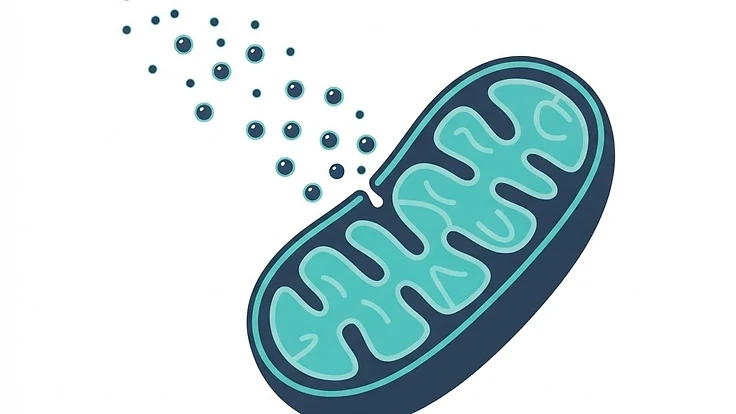
Quick answer: MOTS-c is unusual among research peptides because it is not built from your regular DNA. It comes from the small, separate genome inside your mitochondria, the parts of your cells that produce energy. Researchers believe MOTS-c acts as a signal from your mitochondria to the rest of your cell, and its main studied effect is switching on a pathway called AMPK, which is tied to how cells use energy and sugar. Almost all of the research so far is in cells and animals, not in completed human trials.
Where MOTS-c Actually Comes From
Most peptides discussed in research come from your regular, nuclear DNA. MOTS-c is different. It comes from mitochondrial DNA, the small, separate set of genetic instructions inside your mitochondria, the structures inside cells often described as the cell's power plants. This discovery mattered scientifically because it showed that mitochondrial DNA can produce peptides that act as real signals affecting the rest of the body, not just instructions for making energy locally.
MOTS-c is a small peptide, just 16 amino acids long, and it belongs to a small family of similar mitochondria-derived peptides that researchers have only started mapping out in the last decade or so.
How MOTS-c Is Thought to Work
The core proposed mechanism is that MOTS-c activates a pathway called AMPK, sometimes described as a master energy switch inside cells. When AMPK turns on, cells generally shift toward burning fat and using sugar more efficiently. Research has focused heavily on skeletal muscle as the main site where this effect shows up.
One detail researchers have pointed out is that MOTS-c's effect on metabolism shares some similarity with metformin, a long used diabetes medication that also activates AMPK, though through a different specific pathway and in a different primary tissue, since metformin's main site of action is the liver rather than muscle.
What the Research Has Actually Looked At
Animal studies have linked MOTS-c to improved insulin sensitivity, better glucose handling, and metabolic effects overlapping with the benefits typically associated with regular exercise. Some cell research has also looked at MOTS-c's role in helping repair damaged cell membranes and in supporting mitochondrial function more broadly. Separate research has explored a completely different angle, MOTS-c's potential role in cancer biology, with mixed findings depending on the specific cancer type studied. That range highlights how early stage and wide ranging the current research on this peptide still is.
What Has Not Been Shown
As of now, MOTS-c has not been tested in a completed, published human clinical trial as a therapeutic peptide. It has also not been thoroughly evaluated for long term safety in any species, and researchers have specifically noted that it is not yet known whether there is a level of MOTS-c exposure that could become harmful rather than helpful. This is a genuinely early stage compound, even relative to other research peptides discussed across this site.
Myth vs. Fact
Myth: MOTS-c is basically a natural version of metformin, so it should work the same way. Fact: Both activate AMPK, but through different specific pathways and in different primary tissues. Similar broad effects do not guarantee an identical safety or benefit profile.
Myth: Since it comes from your own mitochondria, it must be automatically safe to add more of it. Fact: Coming from an endogenous source does not establish a safe dose or a proven human effect. Researchers studying MOTS-c have specifically noted that safe exposure levels have not been established.
Bottom Line
MOTS-c stands out because of where it comes from, your mitochondria's own separate DNA, and its proposed role as a real signal affecting metabolism throughout the body. Its early research is genuinely interesting, but it remains one of the least studied peptides in human terms among everything covered on this site.
Research use only. This article is for general education and is not medical advice. MOTS-c is not approved by the FDA for any use in humans, and it has not been evaluated in completed human clinical trials. Talk to a licensed doctor before making any health decision.
Sources referenced: Lee, Yen, and Cohen, Trends in Endocrinology and Metabolism, 2013, introducing the mitochondrial-derived peptide concept; Lee and colleagues, Cell Metabolism, 2015, on MOTS-c and AMPK activation; Alzheimer's Drug Discovery Foundation Cognitive Vitality summary noting the lack of completed human trials.